

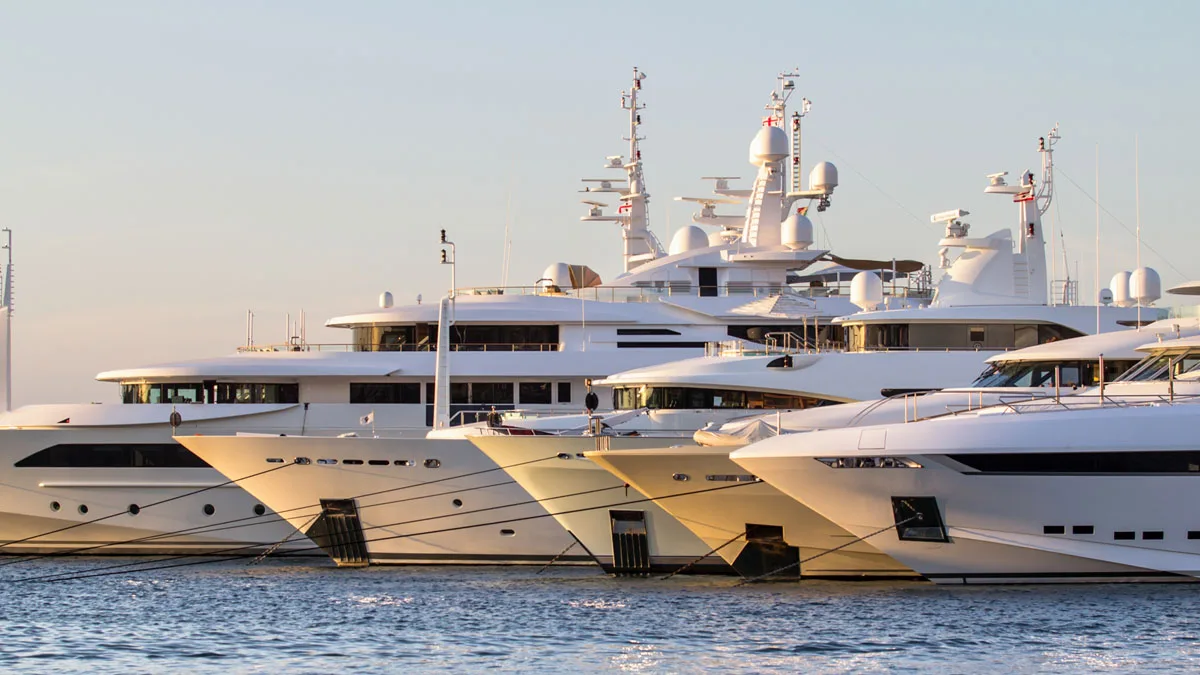
Choosing the ideal yacht size for your charter is all about finding the right combination of space, layout, and guest count for your trip. Yacht size directly influences how many staterooms you will have, how comfortable shared spaces feel, and ultimately how enjoyable the trip is for your entire group. By thinking about the basics of your charter – how many people are traveling, how much personal space you want, and what your trip style looks like – choosing the correct yacht size becomes much easier.
If you are still deciding between categories, it helps to compare layouts by the type of yacht, since motor yachts, sailing yachts, and catamarans can feel very different at the same length.
Why Yacht Size Matters on a Charter
On a private yacht charter, yacht size affects comfort in everyday ways. A few extra feet can mean one or more additional cabins, a larger main salon, or deck areas that feel open rather than cramped when everyone is on board. Yacht size also influences onboard amenities, including multiple lounging zones, better separation between guest and crew areas, and smoother service flow because the crew has more room to work efficiently.
That said, bigger is not automatically better. A larger yacht can add cost and complexity, and it is not always the best fit for your charter itinerary. Some destinations favour smaller yachts, with easier access to secluded anchorages and smaller marinas. The best option is usually a balance of comfort, practicality, and budget – not just a yacht’s length.
Yacht Size Categories
Yachts are often categorized by length. While the exact boundaries vary by listing source, the categories below are a helpful starting point for understanding what you typically get at different sizes.
- Small yachts (roughly under 40 to 60 ft) tend to be cozy and straightforward. They often suit couples, two couples, or very small families looking for a laid-back, intimate experience on the water. You can expect a simpler layout, fewer cabins, and more “together time,” since most living areas are shared.
- Mid-size yachts (around 60 to 80 ft) are a popular sweet spot for family charters and small groups of friends. At this size, you are more likely to find multiple ensuite cabins, better indoor-outdoor flow, and shared spaces that work well for dining and lounging without everyone feeling on top of each other.
- Large yachts and superyachts (80 ft and up) bring a different onboard dynamic, with more volume, more privacy, and more defined zones. These yachts can support higher service levels and more elaborate social setups, particularly for celebrations, multi-family vacations, or business events.
Matching Yacht Size to Your Group
The most reliable way to choose yacht size is to start with your group size and how you want guests to experience time together on board. For more detail on real-world guest limits (beyond cabin count), refer to how many people can fit on the yacht.
Couples and Small Families (2 to 4 people)
For two to four guests, a smaller yacht can feel like a private floating villa without paying for unused cabins. Focus on cabin configuration and whether the outdoor spaces match how you want to spend your days. If you picture long lunches on deck, sunbathing, and easy swimming, prioritize comfortable deck seating and a user-friendly swim platform.
A quick comfort checklist for smaller yachts:
- Each couple has their own cabin (avoid shared-cabin arrangements unless everyone is flexible)
- Adequate shaded seating on deck during the hottest part of the day
- Sufficient refrigerator space and a dining setup that fits your meal style
- A layout that does not force everyone through the same narrow corridor repeatedly
Medium Groups (5 to 8 people)
For five to eight guests, cabin count and bathroom access matter more than most first-time charterers expect. A yacht may look long enough on paper, but if cabins are packed too closely together or shared spaces are limited, it can still feel crowded. Mid-size yachts often offer the best balance of privacy and social flow, especially when the main salon seats everyone comfortably and outdoor dining does not require guests to take turns.
At this group size, motion and noise are also more noticeable simply because more people are moving around. Many groups prefer a bit more length here, since it often feels steadier at anchor and more forgiving when everyone is on deck at the same time.
Large Groups (9 plus people)
For nine or more guests, choosing the right yacht size is often about space, privacy, and flow. Larger groups benefit from separation: quiet corners, multiple lounge areas, and cabins that do not open directly onto the main social hub. Larger yachts also handle entertaining better, whether that means cocktail hour on deck, a more generous dining setup, or crew service that feels efficient without being intrusive.
This size bracket is also a natural fit for a corporate charter, where groups often want a professional onboard setup, structured hosting, and enough space for both networking and downtime.
What Yacht Size Means for Your Experience
Before yacht length translates into cabins and deck space, it helps to understand what size changes in day-to-day charter terms. Beyond the headline number, yacht size affects comfort underway and at anchor, how easily guests can spread out, and how smoothly crew service fits your group’s routine.
Comfort and Living Space
In general, greater length brings greater volume, and volume affects how the yacht feels. You are more likely to see larger cabins, more storage, multiple bathrooms, and distinct interior areas for lounging and dining. Outdoor space also tends to become more usable, with clearer zones for sunbathing, dining, and relaxing.
Design Can Outperform Length, Hull Type Matters
Design can outperform raw length, and hull type also matters. For example, some catamarans deliver excellent deck and salon space for their length thanks to their beam (width), while monohulls of comparable length can feel narrower, so it is smart to compare both length and layout rather than relying on a single number.
Stability and Handling
Larger yachts are usually steadier at anchor and in open water, with a smoother motion that many guests find more comfortable. Smaller yachts are often easier to handle in tight harbors, and can be the practical choice for routes with small coves, shallow bays, or limited marina space.
Budget and Operating Costs
Yacht size has a direct impact on cost because larger yachts usually come with higher charter rates and can also increase variable expenses such as fuel and dockage, especially if your itinerary includes longer cruising days or frequent marina stops. Even within the same destination, moving up in size can significantly change the overall cost profile of the charter.
A practical approach is to set your comfort and privacy budget first, then choose the smallest yacht that consistently delivers that experience. For a deeper breakdown of what drives pricing, check out our “what a yacht charter really costs” guide, and keep in mind that budgets most often drift when you pay for space you do not end up using.
Common Mistakes When Picking Yacht Size
A common mistake is assuming cabins scale automatically with yacht length. Two yachts of similar size can have very different cabin counts and very different cabin quality. Another frequent oversight is underestimating the importance of deck and social areas. Guests spend a lot of time outside, and a yacht that technically sleeps everyone can still feel crowded if the main deck seating does not suit your group.
Choosing solely based on price is another pitfall. A lower-priced yacht of a given length may come with layout compromises that you notice immediately after boarding, such as limited shade, awkward dining flow, or cabins that do not match your guest mix.
Finally, be cautious with “we may add a few more guests.” Extra people change everything: privacy, meal logistics, and daily comfort. Shared bathrooms can become a real pain point as group size increases, especially once you are beyond six guests.
How to Finalize Your Choice
Before you commit, use a simple decision checklist:
- Confirm your real group size and who is sharing cabins
- Decide how much privacy you want (ensuite cabins, separation between cabins, and social areas)
- Define the experience: relaxed family time, celebration energy, or quiet exploration
- Set a budget range that accounts for the size-related cost jump
- Check guest capacity vs sleeping cabins, not just the headline number
- Ask specifically about common areas: outdoor dining, shaded lounging, and deck layout
Once those points are clear, it is much easier to narrow options and compare yachts fairly. If you want the full process from shortlist to contract, follow this guide to how you book a charter.
When you are ready to browse options, start by checking available yachts for charter and filter by the size and layout that best match your group.
Yacht Size FAQs
Is a Bigger Yacht Always More Comfortable?
Not always. Bigger yachts usually offer more space and privacy, but comfort depends heavily on layout, cabin quality, and how your group uses the yacht. The most comfortable choice is often the smallest yacht that still gives you the cabins and social space your group needs.
How Does Group Size Affect What Size Yacht to Charter?
Group size drives cabin needs, bathroom access, and how shared spaces feel. As groups grow, privacy and separation become more important, so moving up a size tier can dramatically improve the onboard experience.
What Yacht Size Is Best for a Family Charter?
For most families, a mid-size yacht is the easiest fit because it usually combines practical cabin layouts with enough shared space for meals, games, and downtime. Prioritize an ensuite cabin setup (or at least enough bathrooms), shaded deck seating, and a swim platform that makes quick water access simple for kids and adults.
Do Catamarans Feel Bigger Than Monohulls at the Same Length?
Often, yes. Catamarans typically have a wider beam, which can translate into a larger salon, wider decks, and more usable lounging space for the same overall length. A monohull may offer a different feel underway and can be sleeker in certain marinas, so it’s worth comparing both length and layout rather than relying on feet alone.
 +1 (305) 964-8437
 contact@bookyachtcharter.com


