

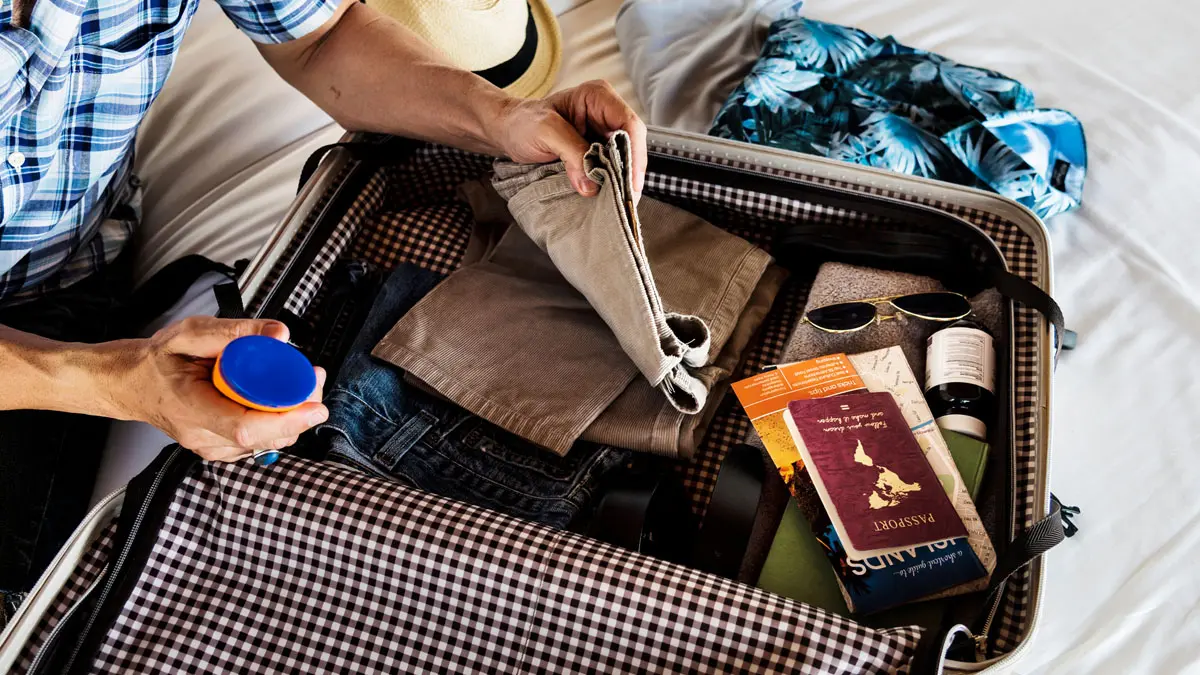
A crewed yacht charter is not a cruise, and it is not a vacation rental. It combines elements of both, with differences that matter once you are packing for a small cabin rather than a hotel room. Overpacking leaves your space cluttered and cramped. Packing the wrong items can mean apologizing to your crew on day one for ruining the teak decks with tanning oil.
This guide covers what experienced charter guests actually bring, what the crew handles, and what first-timers consistently get wrong. Whether you are heading to a well-known charter destination or somewhere more off the beaten track, the basics are the same.
Don’t Start with a List; Begin with Luggage
The number one mistake people make when packing for a crewed luxury yacht charter is not related to what goes in the bag. It is the bag itself. Hard-shell suitcases suit hotels with large closets, but charter yacht cabins are compact by design. A hard-shell case blocks hallways, sits exposed on deck, or creates friction with your crew from day one. Pack for a boat, not a resort, and everything else falls into place.
Before building your list, understand the format. Soft duffel bags collapse completely when unpacked and slide neatly under berths or into the curved storage compartments found on most yachts. One medium duffel per person plus a small backpack for excursions ashore is the industry-standard recommendation. Packing cubes help with organization and keep the cabin livable throughout a week at sea.
Clothing & Footwear for a Crewed Charter
What to wear on a yacht charter depends on your destination as much as your personal style, and this is where most generic packing guides fall short. The dress code expectations on a Mediterranean charter and a Caribbean charter are meaningfully different.
- Mediterranean: Smarter casual is the standard for evenings ashore in ports like Portofino or Saint-Tropez. Linen trousers and a clean shirt, or a sundress and sandals, are a solid baseline. The Greek islands and Turkish coast are slightly more relaxed, but the same principle applies.
- Caribbean and tropical: A more casual register overall, typical of Caribbean charters and other warm-water destinations. Lightweight quick-dry fabrics, swimwear in rotation, and light layers for air-conditioned interiors or cooler evenings on passage cover most situations.
- Footwear: Non-marking rubber-soled deck shoes are standard onboard. Most charter yachts enforce a no-shoes-below policy. Pack deck shoes, walking sandals for ashore, a smarter pair for dinners out, and water shoes if your itinerary includes rocky anchorages or areas known for sea urchins. Four to five pairs are sufficient for a week.
Regardless of destination, a lightweight merino layer or linen overshirt is worth packing. Windy conditions are far more common at sea than guests anticipate, and shoulder-season evenings in the Med can turn cool quickly at anchor. A wetsuit or rash guard is also worth considering for shoulder-season snorkeling, when water temperatures drop enough to make extended time in the water uncomfortable without one.
Sun Protection & Personal Care
Sun protection is often underestimated when preparing for a yacht charter. At sea, UV exposure is uninterrupted, without the natural shade of a beach holiday, and the reflection off the water adds considerable intensity.
One item to leave behind entirely: tanning oil. It absorbs into the teak grain, leaving staining that is extremely difficult to remove and can require significant time and money to repair. Most charter contracts include provisions around deck care, and guests who arrive with tanning oil are typically asked to keep it off the deck. A high-SPF reef-safe lotion achieves the same result without the risk.
A few additional items worth noting:
- Reef-safe sunscreen: Legally required in specific destinations, including the US Virgin Islands, Bonaire, Aruba, and the national marine parks of Thailand. It is not a legal requirement in the Balearics, though marine researchers there recommend it because of ongoing concern over UV filters affecting Posidonia seagrass beds. Mineral-based formulas using zinc oxide or titanium dioxide are the standard. Bring sufficient quantity from home, as availability in remote anchorages is limited and expensive.
- Seasickness remedies: Scopolamine transdermal patches (prescription) are the most effective option for extended offshore passages. They should be applied at least four hours before travel, ideally the evening before, behind the ear; each patch lasts up to 72 hours. They are not reliably available in charter ports, so source them before you travel.
- Prescription medications: Always carry originals in their pharmacy packaging, with documentation, particularly when crossing international borders.
What Your Crew Already Provides
Knowing what a crewed charter includes is just as important as knowing what to pack. On a fully crewed luxury charter, the crew handles considerably more than first-time guests typically expect.
Standard provisioning on most crewed yachts includes:
- Bath and beach towels
- Basic toiletries (shampoo, conditioner, body wash, and often sunscreen)
- Snorkeling equipment and a watersports package, depending on the yacht’s tender and toys setup
- Reusable water bottles, deck cushions, and sun protection items are part of the welcome setup
- Laundry service for guest clothing is often available on longer charters; ask your broker what is included
That said, provisioning is not universal. Quality and scope vary between yachts, and the safest approach is to ask your charter specialist for a specific list of what is included before finalizing your packing. Items worth bringing regardless: personal medication, specialist skincare, a preferred seasickness remedy, quality insect repellent for tropical itineraries, and something to read for afternoons at anchor.
Documents, Valuables, & Practical Admin
Manage your documents simply and physically. Passport validity rules vary by destination: Schengen countries such as Greece require at least three months beyond your departure date, with the passport issued within the previous ten years, while Turkey asks for a full six months.
Carrying six months of validity as a general buffer removes any doubt. For charters crossing international waters, such as Greece to Turkey or island-hopping across Caribbean territories, carrying both the original and a separate photocopy is also a sensible precaution.
- Charter paperwork: Bring a printed copy of your charter agreement and any pre-paid provisioning confirmation. Your crew holds the yacht’s documentation, but having your own copy for border-crossing formalities can be useful.
- Prescription medications: If carrying controlled substances, original pharmacy labels and a physician’s letter are advisable, particularly in Caribbean and Southeast Asian jurisdictions where documentation requirements are enforced closely.
- Travel insurance: Comprehensive cover, including water-based activities, medical evacuation, and charter cancellation, is standard practice in the crewed yacht charter industry.
- Electronics and adaptors: Bring your own chargers and a universal plug adaptor, since onboard sockets vary by yacht and region and can mix EU, UK, and US standards.
- Crew gratuity and cash: Budget for a gratuity, typically 15-20% of the charter fee, and confirm with your broker whether it is settled in cash or added to the final invoice. Carrying some local currency is also useful for taxis, markets, and other small purchases ashore. See our crew gratuity guide for more detail.
While yachts are secure environments with experienced charter crew, anything you would be genuinely distressed to lose is better left at home.
Charter Packing FAQs
Do I Need to Bring Beach Towels on a Crewed Charter?
Most of the time, no. Beach towels are typically provided by the crew as part of the standard guest setup. If you prefer a specific size or material, bringing your own is perfectly reasonable. Just confirm with your broker before departure to avoid carrying duplicates unnecessarily.
Can I Bring Hard-Shell Luggage on a Yacht?
Technically yes, but it creates real problems. Hard-shell cases cannot flex to fit into the curved under-berth storage that most charter cabins rely on. In practice, they end up blocking hallways or sitting on the deck, which inconveniences guests and crew alike. Soft duffel bags are the strongly preferred format across the industry, and most experienced charter guests make the switch after their first trip.
What Should I Wear to Dinner on a Yacht Charter?
It depends on your destination and the specific ports on your itinerary. Mediterranean charters, particularly in the western Med, generally call for smarter casual in the evenings. Caribbean and tropical charters are more relaxed, with casual resort wear covering most situations. Researching the individual ports on your itinerary will give you a better guide than any general rule.
Should I Bring My Own Snorkeling Gear?
Most crewed charter yachts include snorkeling equipment as part of their watersports kit. If you use a prescription mask or have a preferred piece of gear, bringing it is reasonable. Otherwise, the weight and bulk of personal snorkeling equipment are rarely justified.
 +1 (305) 964-8437
 contact@bookyachtcharter.com


